BEST OF SHOWLower East Side
Sue Tompkins: Wanna
Looping rhythms and syncopations collide with words and color that bubble across painting, poetry, and pop.

Words by: Beholdr
PUBLISHED JUL 10, 2026
What to Expect
Every artist has a beat. Sue Tompkins puts hers at the center of Wanna. You'll feel the urge to move straight away. The work swirls, dips, whirls, and beckons you to follow.
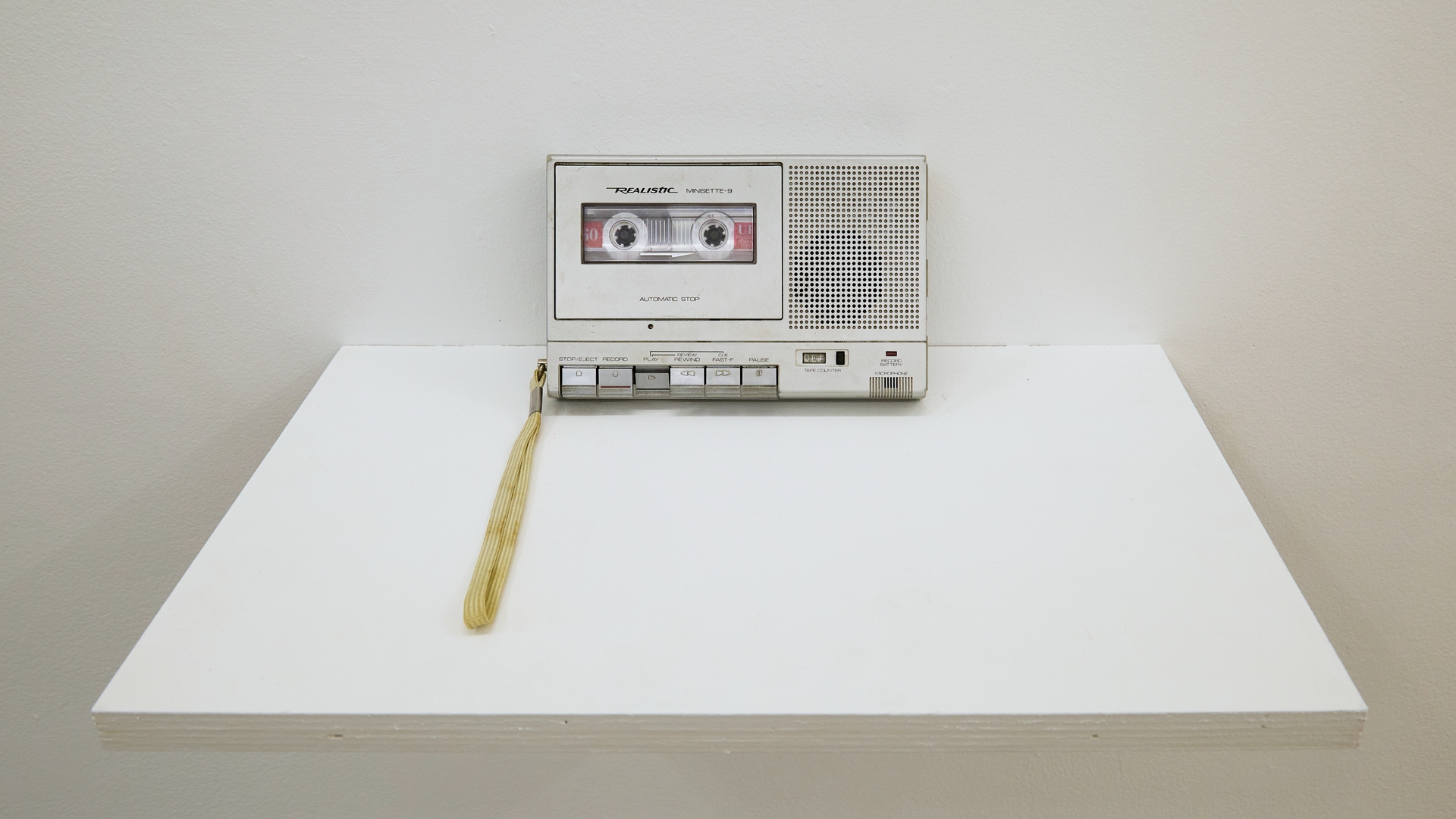
You might know Tompkins as the frontwoman of Life Without Buildings, the Glasgow art-school band that made one perfect record in 2001 and then broke up. Watch the grainy video of her performing The Leanover (2001) on repeat. Her voice skips, stutters, and ricochets across language. It gets under your skin.
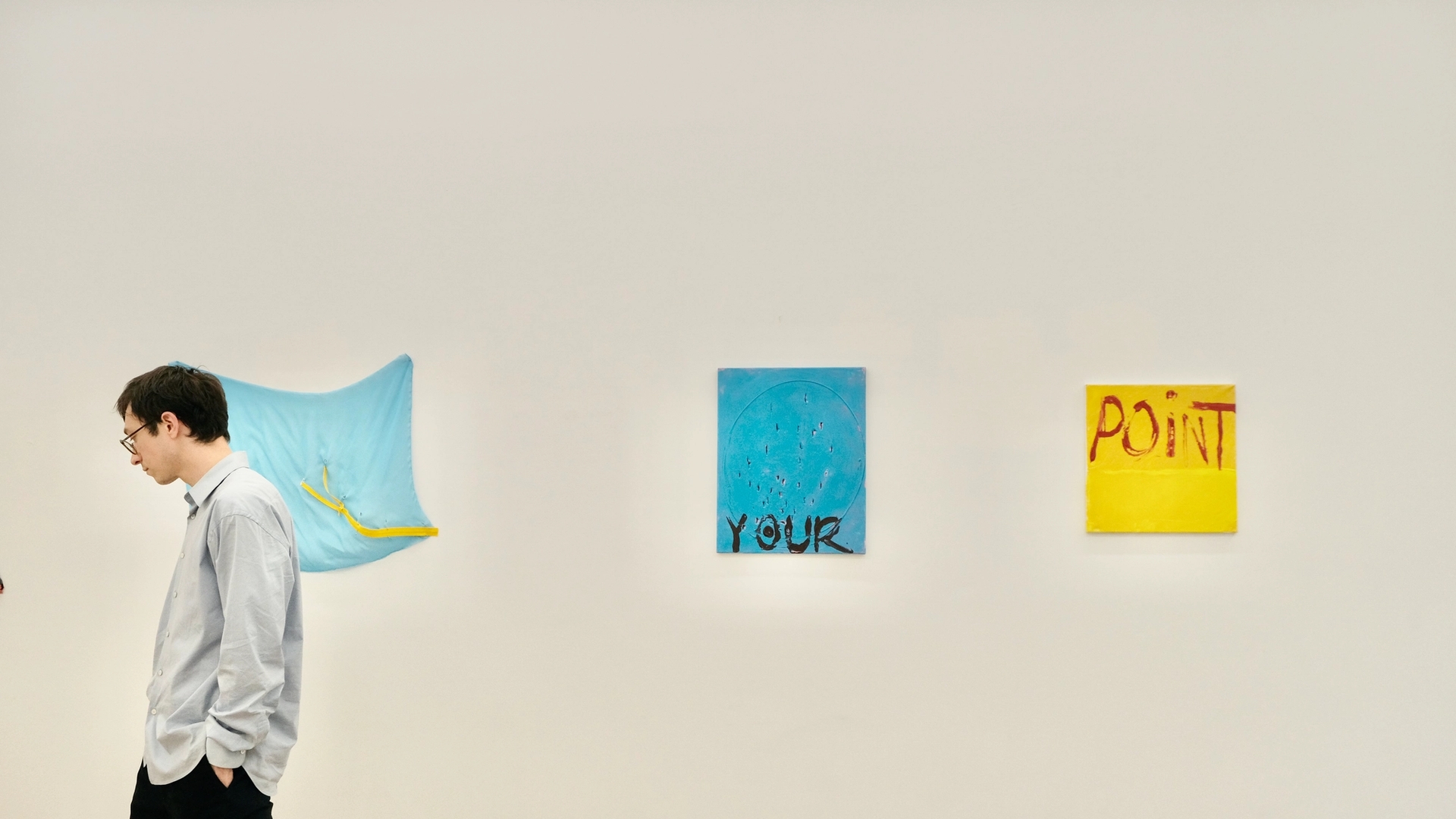
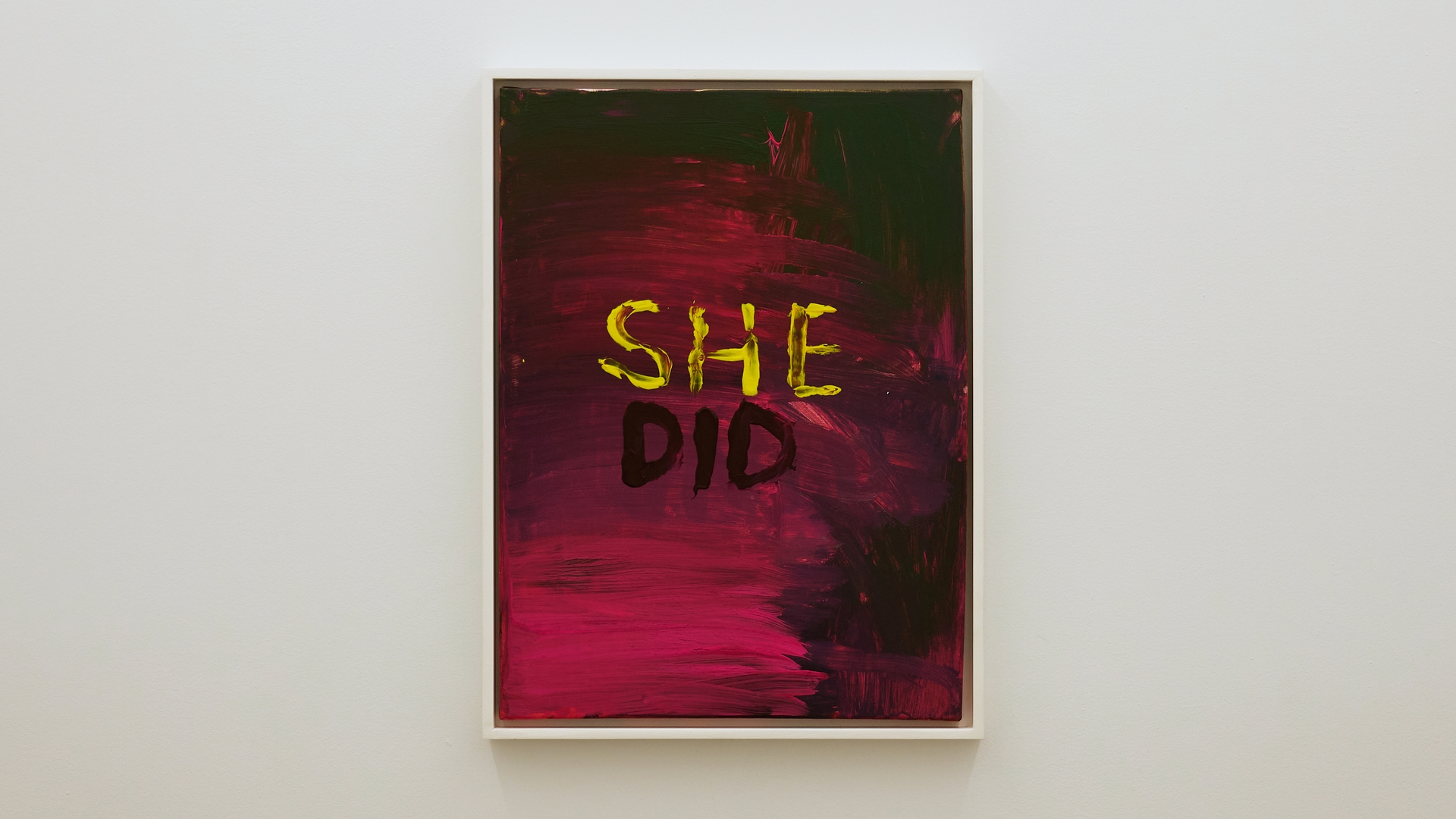
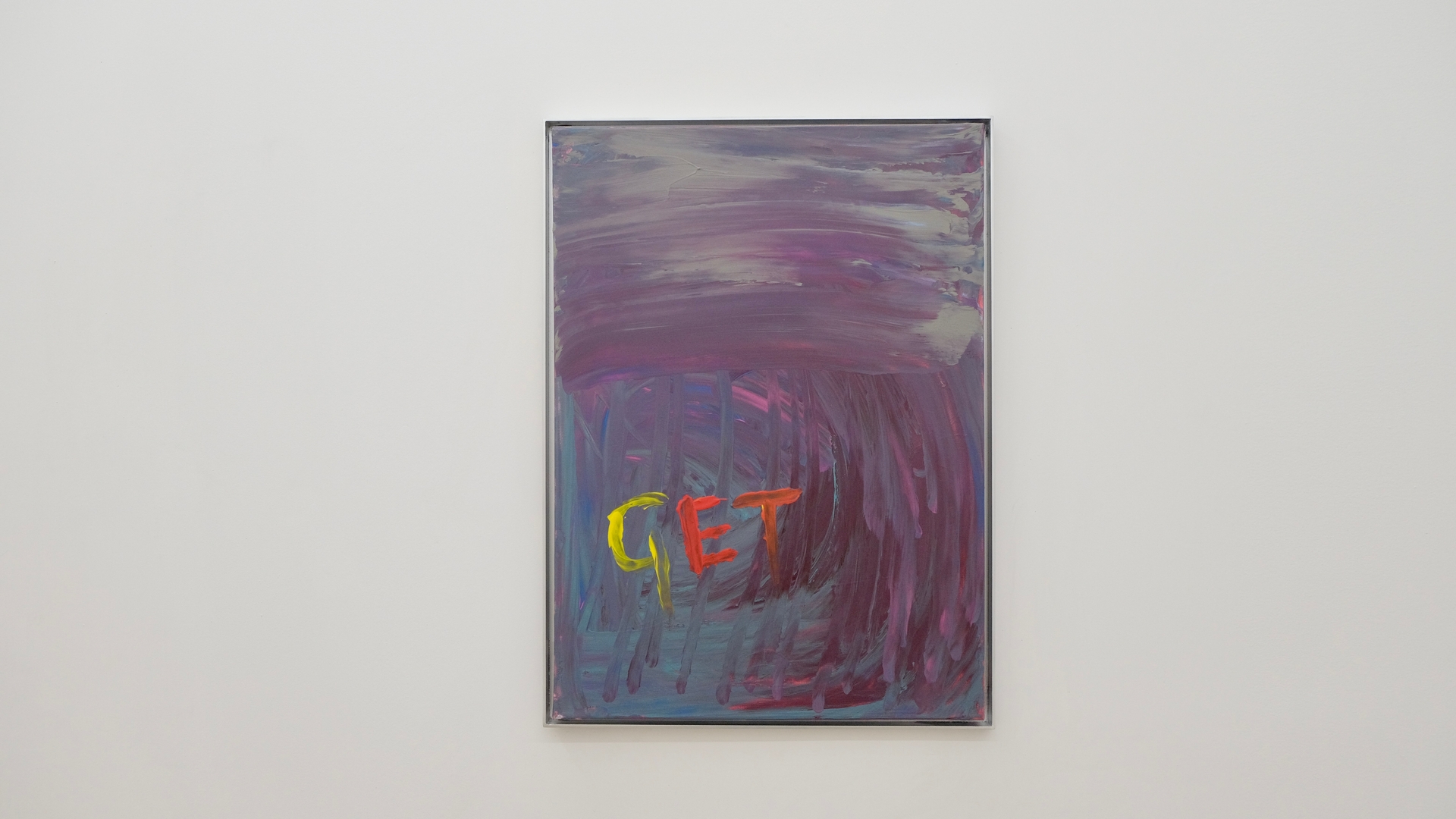
Her artworks at King's Leap are like this. You look at them, hear them, read them. Visual poems made with an old-school typewriter and scattered across sheets of paper. Hangings made from chiffon, zippers, and safety pins that are part laundry line, part prayer flag, and fully punk. Paintings, some stabbed with a sharp object, in colors to brighten stormy weather: warm magentas, cerulean blues, and spring greens.
Words emerge across these paintings in fragments: "SHE DID," "GET," "YOUR," “POINT.” They drift across the gallery's rooms like a text thread, but they move with the energy of a sparrow hopping between branches before suddenly changing direction. Nothing settles for long.
About the Artist
Sue Tompkins (b. Leighton Buzzard, England, 1971) lives and works in Glasgow. Since the late 1990s, she's worked across painting, drawing, installation, sound, and performance — though the words are always at the center. She first gained wider recognition as the vocalist for post-punk band Life Without Buildings, whose fractured spoken-word lyrics have found a new generation of listeners on TikTok.
More Best of Shows
Best of ShowsLower East Side
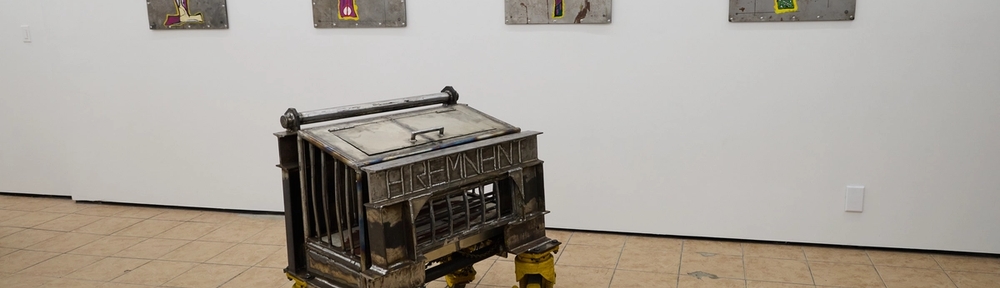
Isaiah Harris: Confessions of Fire
Harris turns the hard-wrought journey from bondage to self-rule into a blacksmith’s language of fire, steel, and swagger.
Read Review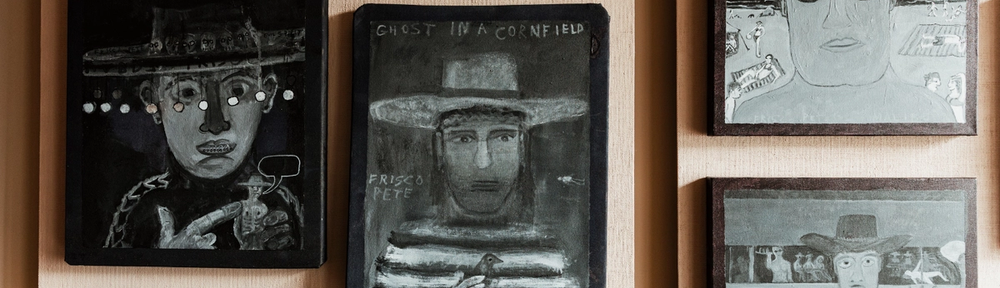
Best of ShowsLower East Side
Frisco Pete: The Schizo Life
Cowboy clichés are turned charmingly on their Stetson-topped heads. The artist’s hidden identity only adds to the allure.
Read Review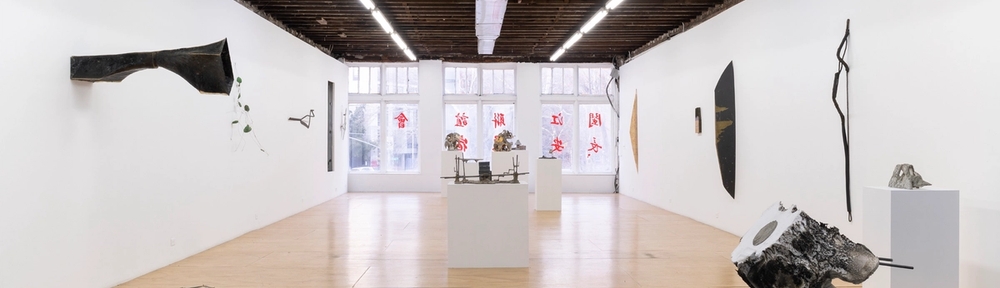
Best of ShowsLower East Side
John Duff
Duff has spent a lifetime making sculpture from what the city throws away.
Read Review